
Practical Coping Strategies & Self-Help Tips for Anxiety Relief 

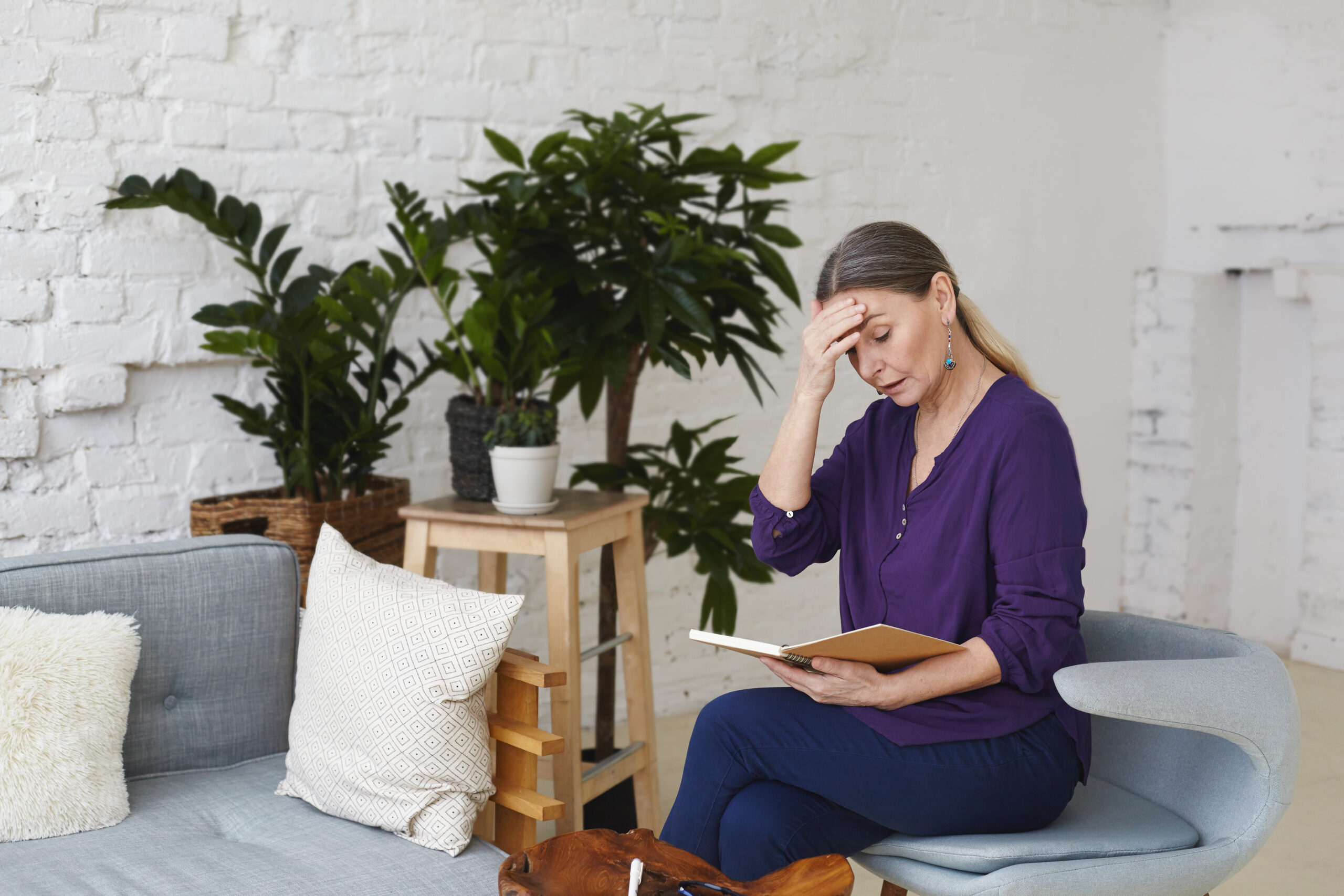
Upset beautiful 60 year old woman sitting on gray chair in living room, touching forehead and looking at open copybook on her lap, feeling frustrated because she forgot about important meetingUpset beautiful 60 year old woman sitting on gray chair in living room, touching forehead and looking at open copybook on her lap, feeling frustrated because she forgot about important meeting

Do you feel tense, restless, or fearful? Anxiety can make you feel entrapped in your head, but the following tools can help ease your tension to stay present and manage anxiety. The anxiety coping strategies we suggest will get the fear out of your mind and make you rest easy.  

What makes you anxious? 

Several reasons can make you anxious. You may feel restless and have a challenging time sleeping the night before an important test, such as an early flight or a job interview. Alternatively, you may feel nauseous when thinking about attending a party or interacting with strangers. You may become tense when checking your bank balance and the bills that keep mounting. 

Occasionally, it may appear that you feel nervous, panicky, and on edge without reason. However, even when it is not obvious, there is always a trigger to the feelings of anxiety and panic. Anxiety often begins with uncertainty. When your brain decides it doesn’t have sufficient information to make predictions, it starts making up stories that are often unpleasant. Some examples of unpleasant thoughts include: 

  • Am I prepared for my speech? My mind may grow blank.  
  • Will my partner return safely? They might be in a car accident.  
  • Will I be liked at the party? Maybe I’ll say something unpleasant or rude.  

Your body’s stress response is activated to release stress hormones like cortisol and adrenaline when you biologically experience anxiety. While the stress response plays an essential role in keeping you safe in dangerous times, it doesn’t do a pleasant job of adjusting to the situation before you. Therefore, it is natural to feel stressed or anxious when you are going out on your first date or facing a threat to your life.   

Anxiety Coping Strategies 

Anxiety comes with different types of health consequences, including headaches, insomnia, nausea, and challenges concentrating. Experiencing anxiety frequently also impacts your life more subtly. You decide to avoid certain places, such as stepping into a cramped elevator or taking a longer route, to prevent merging with a busy highway.  

While anxiety affects everyone, it can make many feel frustrated at how often it shows up in our lives. Fears about not being able to control anxiety’s sudden onset, such as during panic attacks, can make you even more anxious. However, even when such feelings seem intrusive and uncontrollable, it is essential to remember that there are many anxiety self-help strategies you can use to calm your nerves, accept uncertainty, and relieve anxiety. The following ten practical tips can help you better cope with anxiety.  

1/10 Identify Anxiety Triggers 

Although anxiety is common, some situations can kick-start your concerns, and they can vary widely from one individual to another.  When you take a moment to identify your anxiety triggers, you can better predict when you are likely to experience stress and prepare for how to deal with it. Unfamiliar anxiety triggers include: 

  • Meeting new people and initiating conversations.  
  • Performing well at school and work. 
  • Managing your finances.  
  • Being alone. 
  • Thinking about accidents and illnesses.  
  • Confronting people, including family and friends.  
  • Making mistakes when trying new things.  
  • Some people find specific settings, such as being in small spaces, at height, or in crowded rooms, to be triggers of anxiety.  

Identify the Physical Signs of Anxiety 

Besides identifying anxiety triggers, it helps if you consider how anxiety and stress make their appearance in your body. Knowing your physical symptoms helps you notice your anxiety and deal with it, even when the specific triggers are absent, to make you feel anxious for no apparent reason.  Some physical signs can include: 

  • Stomach cramps, nausea, and loss of appetite.  
  • Muscle tension in different parts of your body.  
  • Shallow or rapid-paced breathing.  

After identifying your triggers and physical signs, consider whether you rely on any unhealthy coping mechanisms by default. For example, social situations might make your muscles relax, or make you binge drink and ease anxiety.  

As an exercise, consider writing down your anxiety triggers, physical symptoms, and unhealthy coping mechanisms. The better you identify how and when anxiety strikes, the easier you make it for yourself to take the steps needed to deal with its impact.  

After identifying your anxiety triggers, physical symptoms, and unhealthy coping mechanisms, will you consider heading to the office of the nearest therapist around you? While it would be in your best interest, we suggest you consider some self-help strategies for social anxiety that are also helpful to ease the symptoms you experience.  

2/10 Get Active 

Physical activity is an excellent method of releasing tension because it releases brain chemicals such as serotonin, dopamine, and endorphins. These chemicals quickly help boost your mood, energize you, and relieve anxiety. Short bursts of physical activity can help ease tension. It is something you can do right away to feel less anxious.  

You can consider activities such as going on a quick walk or run, doing a few jumping jacks, trying out some yoga poses, dancing with children, or playing with your dog or pets.  

Regular physical activity also helps in the long run. According to research, exercise, regardless of intensity, helps manage stress and minimizes your risk of developing anxiety disorders. Additionally, it helps boost your self-esteem and interrupts the daily concerns that cycle through your head. Try to get at least 75 minutes of vigorous exercise or 150 minutes of moderate exercise weekly.  

3/3 Remain in the Present Moment by Using Your Senses.  

Anxiety makes it challenging for you to get out of your head. Your thoughts spin and loop. As you obsess over the future or think about past mistakes. Instead of focusing on the days ahead or things beyond your pure control. It helps if you try to grow yourself in the present certainty. The attempt can help interrupt your anxious thoughts and refocus on what’s before you.  

To ease stress and anxiety, use your senses to latch onto the present. Try some breathing exercises for panic attacks, such as smelling nearby flowers or burning a candle. You can even consider tasting foods or drinks. Utilize your sense of touch by self-massaging your neck or hands. Experiment to determine what helps best to refocus on the present and ease your anxiety.  

Grounding techniques for anxiety are also helpful because they can be combined with physical exercise. Whichever form of exercise you try, focus on the sensory experience as tapping into your senses can draw you away from your racing thoughts and minimize anxiety levels.  

4/10 Adopt a Conscious Perspective Towards Anxiety 

With rising anxiety, your immediate reaction might be to fight or suppress your feelings. You may even decide it’s best to simply avoid the triggers, whatever they are. However, daily mindfulness practices to reduce anxiety are also helpful and provide a different path forward.  

Mindful approaches involve adjusting your relationship with your thoughts, emotions, and experiences. Rather than fight against anxiety or run from it, try to develop a non-judgmental awareness, as it can help you start replacing it with a more rewarding state of mind.  

5/10 Allocate Time for Meditation 

Although mindfulness and meditation are often associated, they are distinct practices. Mindfulness is a mindset that you can carry with you, being aware of and accepting the present moment.  You may not meditate, but you can be mindful.  

On the other hand, meditation is a specific practice that requires you to set aside time for it daily. A meditation session can begin by sitting or lying down comfortably and focusing on a single thought or object.  Meditation helps increase your ability to center yourself in the present and be mindful.  

6/10 Regulate Your Breathing to Alleviate Anxiety 

Various types of breathing exercises also aid in stress management.   When you exhale for longer than your inhalation, your heart rate slows, allowing your nervous system to engage and triggering your rest and digest response instead of the fight or flight response.  

One easy and quick breathing exercise is to merely inhale as you count from 1 to 4.  Then start exhaling, counting from 1 to 8.  Repeat the cycles for a few minutes to notice how your mind starts to grow calmer and your body begins to relieve physical tension.  

7/10 Confront and Reshape Negative Thoughts. 

 Occasionally, it helps to take some time to challenge your anxious thoughts, as this can help you gain a more objective perspective on the situation, reducing your concerns and fears.  You can observe when a negative thought crosses your mind before taking a proactive approach if you believe it is backed by evidence.   

For every negative or anxious thought you experience, take note of it on your phone or paper to help you work through the reframing process.  

8/10 Seek Support from Individuals to Ease Anxiety 

A mental health professional is not the only individual you can request help from, because you can also seek support from individuals suffering from anxiety to receive anxiety self-help.  They might surprise you by offering relaxation techniques unheard of earlier to make it easier for you to get out of your head and ease your anxiety.   

9/10 Cultivate Stress and Anxiety-Relieving Practices  

Some choices in your daily life can contribute to your stress levels, making it challenging for you to regulate your emotions effectively.  However, if you are willing to work on alleviating your negative thoughts, you will find the tips we mentioned beneficial.  All you have to do is ensure you sleep well by getting good-quality sleep and avoiding anxiety-increasing substances that make you feel energized but zap you in the long run.  

Practice mindfulness for anxiety by utilizing various relaxation techniques such as yoga, tai chi, progressive muscle relaxation, and visualization exercises.  After finding a technique that works for you, incorporate it into your everyday routine to help manage your stress and anxiety levels.  

10/10 Do not Neglect Professional Help. 

The self-coping techniques and strategies we suggest are beneficial for most people. However, if you are still struggling with intense anxiety that interferes with your work, relationships, and overall well-being, consider an appointment with a therapist.   

Your primary health care provider can determine whether your anxiety symptoms are associated with factors like an underlying medical condition, prescription drugs, or over-the-counter medications.  A therapist or psychiatrist can diagnose anxiety disorders and recommend a customized treatment plan.  

The treatment plan suggested by the medical expert will include medications and therapies, which can be obtained either in person or online.  

Undoubtedly, use the coping strategies discussed in this post because they help with anxiety relief.  At the same time, do not be under the impression that you can overlook the health benefits a professional mental health therapist provides to alleviate anxiety and stress.  

No Comments

Practical Coping Strategies & Self-Help Tips for Anxiety Relief 

Upset beautiful 60 year old woman sitting on gray chair in living room, touching forehead and looking at open copybook on her lap, feeling frustrated because she forgot about important meetingUpset beautiful 60 year old woman sitting on gray chair in living room, touching forehead and looking at open copybook on her lap, feeling frustrated because she forgot about important meeting

Do you feel tense, restless, or fearful? Anxiety can make you feel entrapped in your head, but the following tools can help ease your tension to stay present and manage anxiety. The anxiety coping strategies we suggest will get the fear out of your mind and make you rest easy.  

What makes you anxious? 

Several reasons can make you anxious. You may feel restless and have a challenging time sleeping the night before an important test, such as an early flight or a job interview. Alternatively, you may feel nauseous when thinking about attending a party or interacting with strangers. You may become tense when checking your bank balance and the bills that keep mounting. 

Occasionally, it may appear that you feel nervous, panicky, and on edge without reason. However, even when it is not obvious, there is always a trigger to the feelings of anxiety and panic. Anxiety often begins with uncertainty. When your brain decides it doesn’t have sufficient information to make predictions, it starts making up stories that are often unpleasant. Some examples of unpleasant thoughts include: 

  • Am I prepared for my speech? My mind may grow blank.  
  • Will my partner return safely? They might be in a car accident.  
  • Will I be liked at the party? Maybe I’ll say something unpleasant or rude.  

Your body’s stress response is activated to release stress hormones like cortisol and adrenaline when you biologically experience anxiety. While the stress response plays an essential role in keeping you safe in dangerous times, it doesn’t do a pleasant job of adjusting to the situation before you. Therefore, it is natural to feel stressed or anxious when you are going out on your first date or facing a threat to your life.   

Anxiety Coping Strategies 

Anxiety comes with different types of health consequences, including headaches, insomnia, nausea, and challenges concentrating. Experiencing anxiety frequently also impacts your life more subtly. You decide to avoid certain places, such as stepping into a cramped elevator or taking a longer route, to prevent merging with a busy highway.  

While anxiety affects everyone, it can make many feel frustrated at how often it shows up in our lives. Fears about not being able to control anxiety’s sudden onset, such as during panic attacks, can make you even more anxious. However, even when such feelings seem intrusive and uncontrollable, it is essential to remember that there are many anxiety self-help strategies you can use to calm your nerves, accept uncertainty, and relieve anxiety. The following ten practical tips can help you better cope with anxiety.  

1/10 Identify Anxiety Triggers 

Although anxiety is common, some situations can kick-start your concerns, and they can vary widely from one individual to another.  When you take a moment to identify your anxiety triggers, you can better predict when you are likely to experience stress and prepare for how to deal with it. Unfamiliar anxiety triggers include: 

  • Meeting new people and initiating conversations.  
  • Performing well at school and work. 
  • Managing your finances.  
  • Being alone. 
  • Thinking about accidents and illnesses.  
  • Confronting people, including family and friends.  
  • Making mistakes when trying new things.  
  • Some people find specific settings, such as being in small spaces, at height, or in crowded rooms, to be triggers of anxiety.  

Identify the Physical Signs of Anxiety 

Besides identifying anxiety triggers, it helps if you consider how anxiety and stress make their appearance in your body. Knowing your physical symptoms helps you notice your anxiety and deal with it, even when the specific triggers are absent, to make you feel anxious for no apparent reason.  Some physical signs can include: 

  • Stomach cramps, nausea, and loss of appetite.  
  • Muscle tension in different parts of your body.  
  • Shallow or rapid-paced breathing.  

After identifying your triggers and physical signs, consider whether you rely on any unhealthy coping mechanisms by default. For example, social situations might make your muscles relax, or make you binge drink and ease anxiety.  

As an exercise, consider writing down your anxiety triggers, physical symptoms, and unhealthy coping mechanisms. The better you identify how and when anxiety strikes, the easier you make it for yourself to take the steps needed to deal with its impact.  

After identifying your anxiety triggers, physical symptoms, and unhealthy coping mechanisms, will you consider heading to the office of the nearest therapist around you? While it would be in your best interest, we suggest you consider some self-help strategies for social anxiety that are also helpful to ease the symptoms you experience.  

2/10 Get Active 

Physical activity is an excellent method of releasing tension because it releases brain chemicals such as serotonin, dopamine, and endorphins. These chemicals quickly help boost your mood, energize you, and relieve anxiety. Short bursts of physical activity can help ease tension. It is something you can do right away to feel less anxious.  

You can consider activities such as going on a quick walk or run, doing a few jumping jacks, trying out some yoga poses, dancing with children, or playing with your dog or pets.  

Regular physical activity also helps in the long run. According to research, exercise, regardless of intensity, helps manage stress and minimizes your risk of developing anxiety disorders. Additionally, it helps boost your self-esteem and interrupts the daily concerns that cycle through your head. Try to get at least 75 minutes of vigorous exercise or 150 minutes of moderate exercise weekly.  

3/3 Remain in the Present Moment by Using Your Senses.  

Anxiety makes it challenging for you to get out of your head. Your thoughts spin and loop. As you obsess over the future or think about past mistakes. Instead of focusing on the days ahead or things beyond your pure control. It helps if you try to grow yourself in the present certainty. The attempt can help interrupt your anxious thoughts and refocus on what’s before you.  

To ease stress and anxiety, use your senses to latch onto the present. Try some breathing exercises for panic attacks, such as smelling nearby flowers or burning a candle. You can even consider tasting foods or drinks. Utilize your sense of touch by self-massaging your neck or hands. Experiment to determine what helps best to refocus on the present and ease your anxiety.  

Grounding techniques for anxiety are also helpful because they can be combined with physical exercise. Whichever form of exercise you try, focus on the sensory experience as tapping into your senses can draw you away from your racing thoughts and minimize anxiety levels.  

4/10 Adopt a Conscious Perspective Towards Anxiety 

With rising anxiety, your immediate reaction might be to fight or suppress your feelings. You may even decide it’s best to simply avoid the triggers, whatever they are. However, daily mindfulness practices to reduce anxiety are also helpful and provide a different path forward.  

Mindful approaches involve adjusting your relationship with your thoughts, emotions, and experiences. Rather than fight against anxiety or run from it, try to develop a non-judgmental awareness, as it can help you start replacing it with a more rewarding state of mind.  

5/10 Allocate Time for Meditation 

Although mindfulness and meditation are often associated, they are distinct practices. Mindfulness is a mindset that you can carry with you, being aware of and accepting the present moment.  You may not meditate, but you can be mindful.  

On the other hand, meditation is a specific practice that requires you to set aside time for it daily. A meditation session can begin by sitting or lying down comfortably and focusing on a single thought or object.  Meditation helps increase your ability to center yourself in the present and be mindful.  

6/10 Regulate Your Breathing to Alleviate Anxiety 

Various types of breathing exercises also aid in stress management.   When you exhale for longer than your inhalation, your heart rate slows, allowing your nervous system to engage and triggering your rest and digest response instead of the fight or flight response.  

One easy and quick breathing exercise is to merely inhale as you count from 1 to 4.  Then start exhaling, counting from 1 to 8.  Repeat the cycles for a few minutes to notice how your mind starts to grow calmer and your body begins to relieve physical tension.  

7/10 Confront and Reshape Negative Thoughts. 

 Occasionally, it helps to take some time to challenge your anxious thoughts, as this can help you gain a more objective perspective on the situation, reducing your concerns and fears.  You can observe when a negative thought crosses your mind before taking a proactive approach if you believe it is backed by evidence.   

For every negative or anxious thought you experience, take note of it on your phone or paper to help you work through the reframing process.  

8/10 Seek Support from Individuals to Ease Anxiety 

A mental health professional is not the only individual you can request help from, because you can also seek support from individuals suffering from anxiety to receive anxiety self-help.  They might surprise you by offering relaxation techniques unheard of earlier to make it easier for you to get out of your head and ease your anxiety.   

9/10 Cultivate Stress and Anxiety-Relieving Practices  

Some choices in your daily life can contribute to your stress levels, making it challenging for you to regulate your emotions effectively.  However, if you are willing to work on alleviating your negative thoughts, you will find the tips we mentioned beneficial.  All you have to do is ensure you sleep well by getting good-quality sleep and avoiding anxiety-increasing substances that make you feel energized but zap you in the long run.  

Practice mindfulness for anxiety by utilizing various relaxation techniques such as yoga, tai chi, progressive muscle relaxation, and visualization exercises.  After finding a technique that works for you, incorporate it into your everyday routine to help manage your stress and anxiety levels.  

10/10 Do not Neglect Professional Help. 

The self-coping techniques and strategies we suggest are beneficial for most people. However, if you are still struggling with intense anxiety that interferes with your work, relationships, and overall well-being, consider an appointment with a therapist.   

Your primary health care provider can determine whether your anxiety symptoms are associated with factors like an underlying medical condition, prescription drugs, or over-the-counter medications.  A therapist or psychiatrist can diagnose anxiety disorders and recommend a customized treatment plan.  

The treatment plan suggested by the medical expert will include medications and therapies, which can be obtained either in person or online.  

Undoubtedly, use the coping strategies discussed in this post because they help with anxiety relief.  At the same time, do not be under the impression that you can overlook the health benefits a professional mental health therapist provides to alleviate anxiety and stress.  

No Comments

Copyright 2025 Site. All rights reserved